
Search
Additional Links Contact Us- Phone: (800) 423-4198
- Toll-Free: (815) 885-1900
- Email: [email protected]


ProMach is your partner from start to finish. Our product brands are grouped into distinct business lines that make the most sense to our customers, covering every function of the production line: Filling, Bottling & Capping, Decorative Labeling, Flexibles & Trays, Pharma, Handling & Sterilizing, Labeling & Coding, Robotics & End of Line, and Systems & Integration.
learn more



Before a single pouch is formed, the efficiency of flexible packaging begins with rollstock film. One roll can replace thousands of rigid containers, dramatically reducing the space required for storage, handling, and inbound freight.
That early-stage efficiency matters more than ever. Supply chains face constant pressure from rising freight costs, warehouse congestion, and shifting demand. Small inefficiencies compound quickly and affect margins. What looks manageable at first can erode performance across your entire operation.
Flexible packaging changes that dynamic. When you understand the impact of flexible packaging on supply chain efficiency, you see how pouch systems reduce material waste, streamline throughput, and create measurable cost control from the plant floor to final delivery.
Let’s take a closer look at how and why it matters for your operation.
Rigid packaging takes up space before you even fill it. That footprint increases your warehousing costs and limits production agility.
In many cases, manufacturers must manage truckloads of empty containers that consume space without adding value. By comparison, rollstock films arrive compact and ready for production, allowing you to store thousands of potential packages in a fraction of the space.
Once formed, filled, and sealed, those pouches continue to support space savings throughout storage and distribution.
Transportation is one of the largest expenses in your supply chain. Heavier packaging increases fuel consumption and limits load density.
Flexible packaging weighs significantly less than rigid alternatives. That means:
Those savings multiply quickly as your volume increases. If you ship nationally or globally, lighter packaging improves truck use and delivers consistent cost advantages across every route.
Supply chain efficiency depends on stability. Damaged loads lead to returns, rework, and frustrated customers.
Flexible pouches stack efficiently when designed correctly. With optimized case dimensions and proper seal integrity, you create dense, stable pallet patterns that maximize cube utilization.
You also reduce void space. Less movement during transit means fewer damaged goods and fewer chargebacks from distributors.
Markets move quickly. Retailers adjust orders, and SKUs expand. If your packaging system can’t keep up, you lose responsiveness.
Flexible packaging formats allow faster changeovers compared to many rigid systems. Modern horizontal form fill seal machines support multiple pouch styles through efficient tooling adjustments.
This flexibility allows you to respond to shifting demands without excessive downtime and strengthens your entire supply chain.
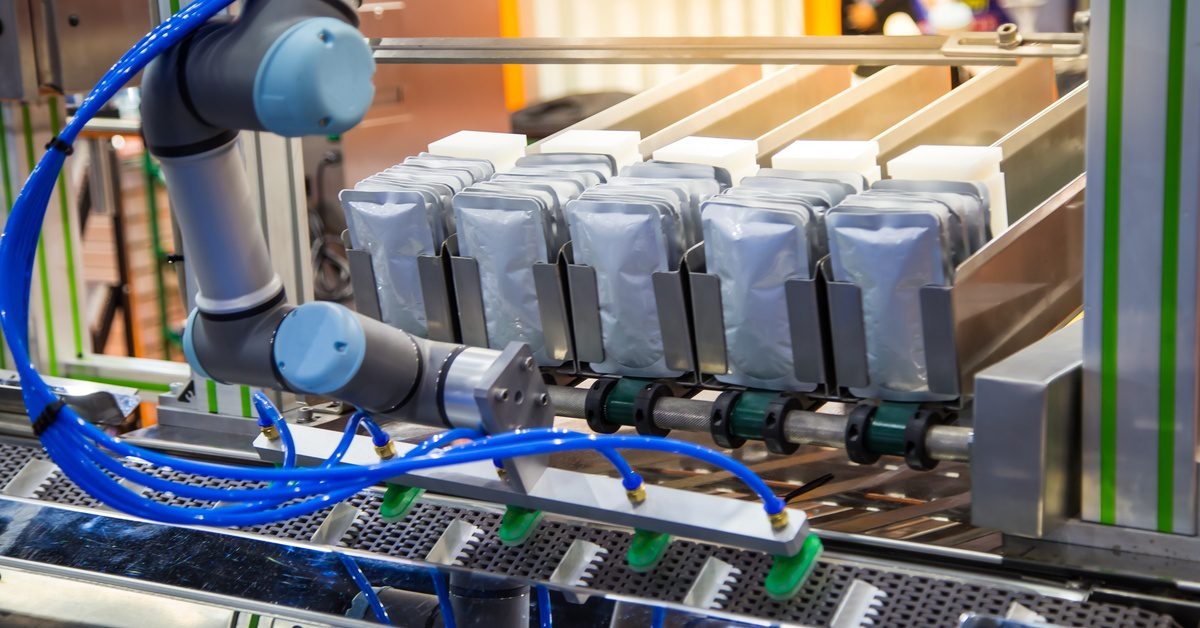
Efficiency doesn’t stop at logistics; your packaging line is another focus area.
High-performance pouch systems improve cycle rates while maintaining seal quality and fill accuracy. When production runs smoothly, you reduce the chances of warehousing and distribution delays.
Partnering with experienced FFS machine manufacturers ensures your equipment aligns with your product type, pouch format, and output goals. The right machine configuration directly impacts uptime, scrap rates, and overall operational efficiency.
Reliable equipment also reduces emergency maintenance and unexpected downtime. That consistency strengthens your supply planning and delivery performance.
Waste hurts profitability and brand perception. Excess material, product spoilage, and damaged goods increase both costs and environmental impact.
Flexible packaging typically uses less raw material than rigid alternatives. You decrease plastic usage per unit while maintaining barrier performance and durability.
Stronger seals protect product integrity. When you control oxygen and moisture exposure, you extend shelf life and reduce spoilage during distribution. That protection supports retailers and consumers alike.
Think about your warehouse today. How much room does finished inventory consume? How much staging space do you use for empty containers?
Flexible pouching reduces both. Flat roll stock minimizes storage requirements before production. Finished pouch products stack compactly in cases and on pallets.
This space efficiency supports:
When your warehouse operates efficiently, you shorten lead times and strengthen customer satisfaction.
Modern brands don’t rely on a single product size or format. They experiment with single-serve packs, resealable options, and specialty shapes.
Flexible packaging supports this diversification without demanding entirely new infrastructure. Horizontal pouch systems can produce 3-side seal, 4-side seal, gusseted, stand-up, and zipper pouches on adaptable platforms.
That versatility improves supply chain resilience. You introduce new SKUs without rebuilding your distribution model from scratch.
One compromised seal can undo every efficiency gain. Leaks, contamination, or air infiltration damage the product and your brand reputation.
Strong seal performance keeps your supply chain intact. Proper heat profiles, dwell times, and material selection ensure consistent results at scale.
Seal integrity in flexible packaging is a critical factor in maintaining an efficient supply chain. A stable seal reduces returns, protects retailer relationships, and prevents costly recalls.

Modern pouch systems integrate advanced controls and monitoring capabilities. You can track cycle rates, reject rates, and maintenance needs in real time.
When you collect accurate production data, you improve forecasting. Procurement aligns more closely with actual demand, and maintenance schedules become proactive.
Data transparency reduces surprises. In supply chain management, fewer surprises mean stronger performance.
Not every packaging system delivers the same results. The equipment you choose shapes your operational flexibility for years.
HMC Products supports manufacturers with new HMC Pouchmasters and rebuilt horizontal systems designed to handle a wide range of pouch formats. When your equipment aligns with your growth strategy, your supply chain becomes a competitive advantage instead of a constraint.
If you’re evaluating how to improve efficiency across your operation, start by assessing how flexible packaging integrates with your current logistics model. Then take the next step and connect with our team to properly enhance your horizontal pouch systems. The right guidance can transform your supply chain performance.
Supply chain efficiency improves when every decision—from materials to machinery to logistics—works together to eliminate friction. Those improvements build on each other to create measurable operational strength.
As you reduce packaging weight and increase cube utilization, you also protect product integrity with stronger seals and more stable loads. That combination improves predictability under tight deadlines, fluctuating demand, and rising transportation costs.
If you’re evaluating how packaging strategy fits into your long-term growth plan, now’s the time to take a closer look at where flexibility can unlock performance gains across your entire operation.