
Search
Additional Links Contact Us- Phone: (800) 423-4198
- Toll-Free: (815) 885-1900
- Email: [email protected]


ProMach is your partner from start to finish. Our product brands are grouped into distinct business lines that make the most sense to our customers, covering every function of the production line: Filling, Bottling & Capping, Decorative Labeling, Flexibles & Trays, Pharma, Handling & Sterilizing, Labeling & Coding, Robotics & End of Line, and Systems & Integration.
learn more


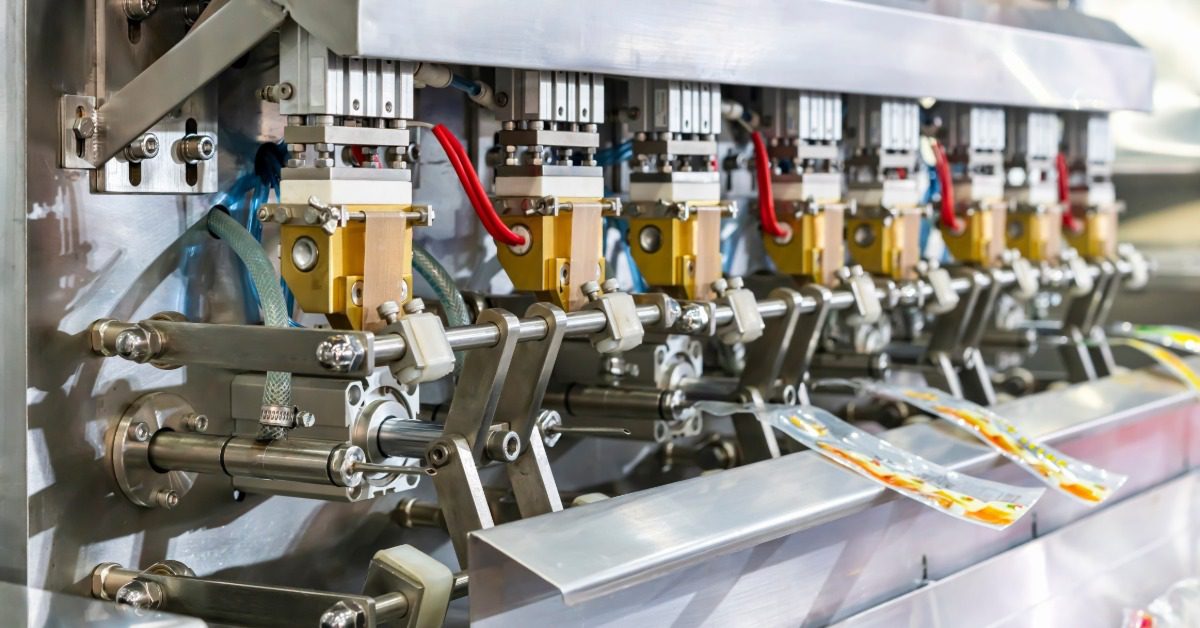
Running a pouch line without the right filling system produces constant friction. You’ll see inconsistent fills, wasted product, and slow cycle times that cut into output. Many operations start with a pouch machine and treat the filler as an afterthought, resulting in mismatched performance across the line. If you want efficiency and accuracy, you need to treat filling as a core decision from the start.
Choosing the right filling system for your pouch machine demands a deeper look at your product, your throughput goals, and how each component interacts. When you align those factors correctly, your entire line runs more predictably.
Before you evaluate equipment, you need to define what you’re filling. Product behavior directly impacts the type of filling system you’ll need.
Liquids flow differently from powders, and powders behave differently from granules or solids. Viscosity, density, and particle size all influence how material moves through a system. If you ignore those details, you’ll struggle with accuracy and consistency from day one.
You should also consider how your product reacts to movement. Some materials foam, settle, or separate under pressure. Each of those behaviors requires a specific filling approach to maintain product integrity.
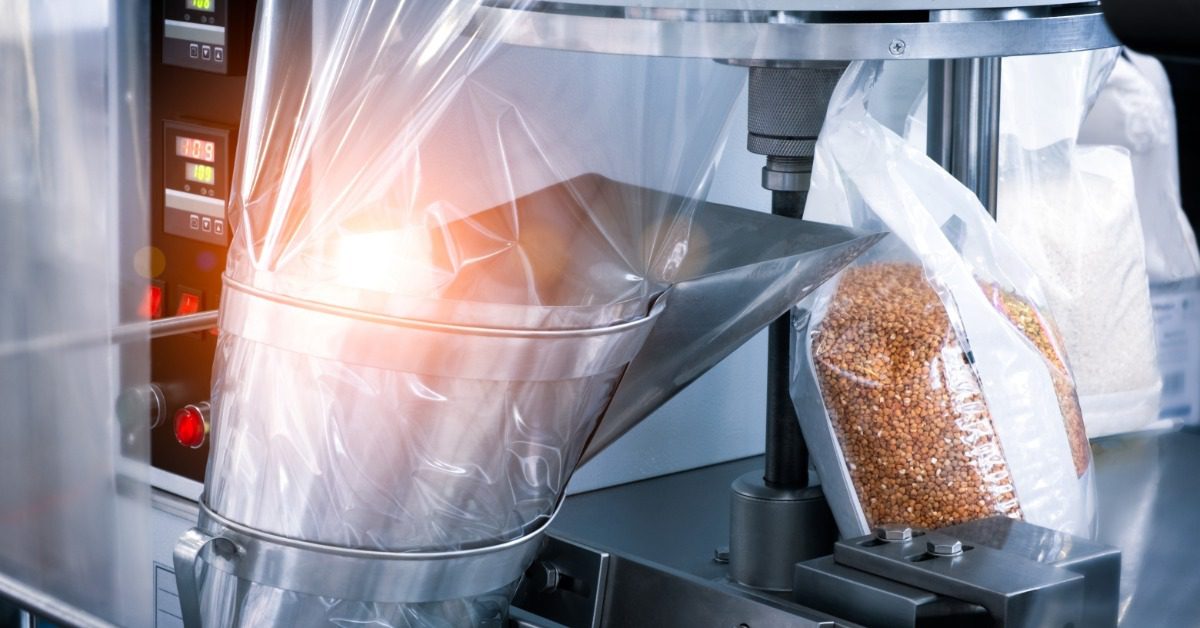
Once you understand your product, you can align it with the right filling technology. This step defines how well your system performs.
Different filling methods handle specific materials more effectively. You’ll see strong performance when you match technology to product behavior rather than forcing a one-size-fits-all solution.
For heavier or bulk fills, HMC’s IMTE provides added support and stability to maintain consistency during more demanding production conditions.
Each option brings its strengths, but your product dictates the right choice. When you align those correctly, you reduce waste and improve repeatability across every cycle.
A filling system needs to synchronize with the pouch machine to maintain flow across the entire line.
Timing, indexing, and pouch positioning all influence how efficiently your filler performs. If those elements fall out of sync, you’ll see spillage and downtime that slows production.
This becomes even more important when you run a horizontal pouch packaging machine, where pouch opening and filling occur in a coordinated sequence. The filler must match the machine’s rhythm to avoid bottlenecks or missed cycles.
HMC’s IM platform offers broad flexibility across applications, which makes it a strong fit for manufacturers running varied product lines or changing pouch formats.
Each configuration is designed to integrate seamlessly with the appropriate filling technology, allowing manufacturers to match equipment to specific product characteristics and production goals without compromise.
This level of integration helps maintain consistent throughput while supporting product quality, even as materials, formats, or production demands change.

You can’t choose filling equipment without defining your production targets. Output expectations shape the speed and configuration of your system.
If you underestimate your needs, your line will struggle to keep up with demand. If you oversize the system, you’ll invest more than necessary and create operational inefficiencies.
Think about both current and future production. Growth plans should influence your decision so you don’t outgrow your equipment too quickly.
Aligning throughput with equipment capability keeps your operation scalable and efficient.
Every operation faces the same challenge: balancing fill accuracy with production speed. You can’t ignore either one.
High-speed systems move products quickly, but they may sacrifice precision if not properly configured. On the other hand, ultra-precise systems can slow down output if they prioritize accuracy above all else.
You need to define where your priorities sit. Food products, pharmaceuticals, and regulated goods demand tighter accuracy. High-volume snacks or commodity products may allow for more flexibility.
When you find the right balance, you’ll maintain efficiency and consistency without compromising performance.
A filling system is a long-term investment, so you’ll need equipment that survives continuous use.
Maintenance requirements play a major role in your decision. This is because complex systems deliver high performance, but they also require more attention and technical support.
Look at how easily your team can access components, perform cleaning, and handle routine service. Downtime costs more than any upfront savings you might gain from a lower-priced machine.
Using a reliable maintenance system keeps your line running and reduces unexpected interruptions.
Many operations switch between different materials, including pouch sizes and formats. Flexibility becomes a key advantage in those situations. A filling system that adapts quickly allows you to handle new opportunities without major equipment changes.
Quick changeovers, adjustable settings, and modular components all contribute to flexibility. Those features help you stay competitive in a market that demands variety.
When your equipment adapts to your needs, you avoid costly limitations down the line.
Modern filling equipment relies on advanced controls to maintain consistency. Automation is a key factor in improving performance and reducing operator error.
You should evaluate how the system handles monitoring, adjustments, and data tracking. Real-time feedback allows operators to make corrections before issues escalate.
Automation also improves repeatability. Once you dial in the right settings, the system can maintain them across long production runs without constant intervention.
Stronger control systems lead to more predictable results and better overall efficiency.
Price always factors into equipment decisions, but the initial cost doesn’t tell the full story. You need to evaluate the total cost of ownership.
Long-term value depends on how well your equipment adapts over time. Many manufacturers avoid complete system replacement by rebuilding or modernizing existing pouch machines to support new filling applications or changing production demands. Upgrade paths can extend equipment life substantially while improving efficiency and reducing operational disruption.
You should also consider how the system impacts labor. More efficient machines reduce manual intervention and free up your team to handle higher-value tasks. Looking at the full picture helps you make a smarter investment.
The right filling system for your pouch machine requires more than a quick specification comparison. You need to evaluate how each component supports your process and long-term goals.
If you’re navigating these decisions and want expert guidance, HMC Products brings years of experience in horizontal pouch systems and filling integration. Connect with our team to identify a solution that fits your production goals without compromise.